
Buy-Out Bonds Explained: Your Pension Options After Leaving an Employer
- Pension Advice
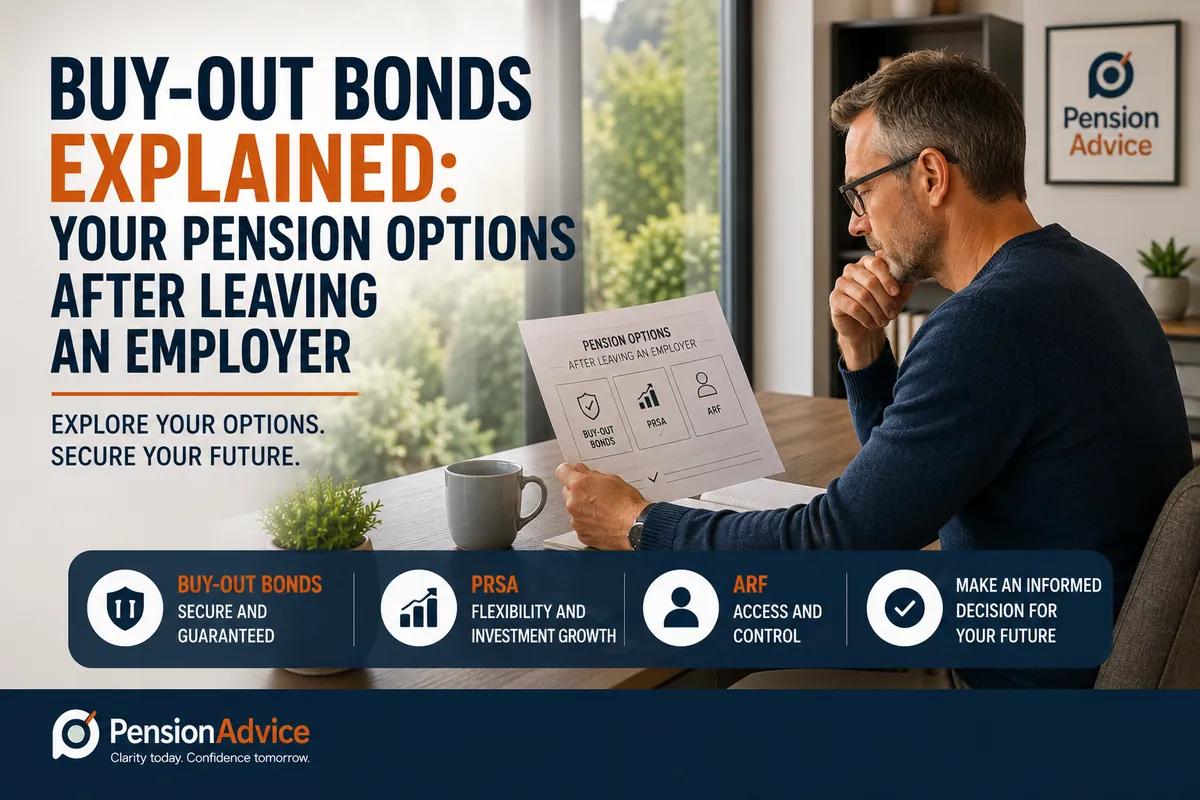
Also known as a Personal Retirement Bond, a Buy-Out Bond is one of the most popular options for people leaving a job with a pension attached, and one of the least understood.
Ask most people what happens to their old employer pension by default, and they’ll assume it just stays where it is. A Buy-Out Bond is the alternative: an active decision to move it somewhere entirely your own.
It’s worth understanding properly, because it’s a permanent, one-way transfer. Once your pension is in a Buy-Out Bond, it can’t be moved back, so it’s worth being confident in the decision before you make it.
6 Things to Know
It puts the pension entirely in your name
A Buy-Out Bond takes your occupational pension out of your former employer’s scheme and into a policy that belongs solely to you. The trustees and your old employer have no further involvement.
You control the investment choices
Rather than being limited to whatever funds your former employer’s scheme offers, you select the funds yourself, based on your own risk appetite and timeline.
Access is available from age 50
In line with standard early access rules for occupational pension transfers, a Buy-Out Bond can typically be accessed from age 50 onwards.
It only accepts one transfer
A Buy-Out Bond is a single-transfer vehicle. You can’t add further contributions to it later, and each old employer pension needs its own separate Bond.
The full value passes to your estate
If you die before accessing the Bond, its value generally passes to your estate, subject to the specific scheme and policy terms.
It's not automatically the right choice
For some pensions, particularly defined benefit schemes, leaving the pension where it is may be preferable. The right decision depends on your circumstances and the pension type involved.
How the Transfer Actually Works
The process is more straightforward than it might sound. As your adviser we request a transfer value and accompanying paperwork called leaving service options from your former employer’s pension trustees, confirming the current worth of your benefit.
You choose a Buy-Out Bond provider and select the investment funds you want your money placed in, based on your risk appetite and how far off retirement you are.
Once the paperwork is signed, the trustees transfer the value directly to the new provider, and your former employer’s involvement ends completely. From that point, statements, fund switches, and eventual access all run through your new provider, not your old employer.
What It Costs
Buy-Out Bonds typically carry an ongoing Annual Management Charge, similar to any other pension product, along with potential fund-specific charges depending on where you invest. There’s usually no charge simply for accepting the transfer in, though it’s worth confirming this with your chosen provider. The more relevant comparison is often between what your former employer’s scheme was charging and what the Buy-Out Bond charges going forward — if the new structure is meaningfully cheaper or offers better fund choice, that’s a real, compounding benefit over the years until you retire.
Buy-Out Bond or Stay Put? What to Weigh Up
For defined contribution pensions, a Buy-Out Bond often makes sense if you want more investment choice and independence from your former employer’s scheme. For defined benefit pensions, the guaranteed nature of the benefit means transferring out is a much bigger decision, and it’s worth getting specific advice on what you’d be giving up before proceeding.
Buy-Out Bond vs Leaving It in the Old Scheme
Buy-Out Bond: you choose the funds. Old scheme: set by trustees.
Buy-Out Bond: often more competitive on modern platforms. Old scheme: varies, sometimes legacy pricing.
Both: generally from age 50 for occupational pension benefits.
Buy-Out Bond: direct with your chosen provider. Old scheme: via your former employer’s trustees.
Buy-Out Bond: permanent once transferred. Old scheme: can still be transferred out later if you change your mind.
Considering a Buy-Out Bond? We’ll compare your options and help you decide whether a Buy-Out Bond is right for your pension — at no obligation.
Important information: This article is for information purposes only and does not constitute financial advice. Rules are current as at July 2026 and subject to change. Always seek professional regulated advice before making decisions about your pension. Gen Z Financial Solutions Limited trading as Pension Advice is regulated by the Central Bank of Ireland.


Have a question about your pension?
Speak with a qualified advisor — no obligation, just clear guidance.
Related service
Gen Z Financial Solutions Limited trading as Pension Advice is regulated by the Central Bank of Ireland.
Frequently Asked Questions
What is a Buy-Out Bond?
A Buy-Out Bond, also known as a Personal Retirement Bond, is a policy that lets you transfer an occupational pension from a former employer into your own name, entirely independent of that employer.
When can I access a Buy-Out Bond?
Generally from age 50, in line with early access rules for occupational pension transfers.
Can I add further contributions to a Buy-Out Bond?
No. A Buy-Out Bond accepts a single transfer in — you cannot make ongoing contributions to it afterwards.
Can I combine several old pensions into one Buy-Out Bond?
No. Each former employer pension must be transferred into its own separate Buy-Out Bond.
Is a Buy-Out Bond better than leaving my pension with my old employer?
It offers more control over investment choice and independence from your former employer’s scheme, but leaving it in place is also a valid option, particularly for defined benefit pensions.
What happens to a Buy-Out Bond if I die before retirement?
The full value generally passes to your estate, subject to the scheme and policy terms.
Does a Buy-Out Bond cost anything to set up?
There can be provider and ongoing management charges, which vary — it’s worth comparing these against what you’re currently paying in your existing scheme.
Can I transfer a defined benefit pension into a Buy-Out Bond?
It’s possible in some cases, but transferring a defined benefit pension is a significant decision that requires specific specialist advice given what you’d be giving up.
Who typically uses a Buy-Out Bond?
People who’ve left an employer, particularly through redundancy or a job change, and want control over their pension investments rather than leaving it in a former employer’s scheme.
Do I need advice before setting up a Buy-Out Bond?
Yes. It’s a permanent transfer decision, so it’s worth understanding the charges, investment options, and how it compares with your other options first.
Have a question about your pension?
Speak with a qualified advisor — no obligation, just clear guidance.